When we walk into a library whether it be in a school, university or your local library down the road, there is one thing we always notice; the smell of books. Often people comment that ‘Nothing beats the smell of a real book’. But what does a ‘real book’ consist of nowadays?
With the ever-growing advancement in technology, books are changing and becoming more adaptable to a wider demographic. Just as we may walk into a library and head towards the Psychological Thrillers or run towards classics from our childhood, we now approach books in a different way. Are we going to listen to a spooky horror audiobook on the way into work? Or immerse ourselves into a multi-sensory eBook instead?
Working in the education sector for the last eleven years and being a classroom teacher for seven, I have encountered hundreds of different children each with their own learning style. With each learning style comes a different approach to how children read books. One child would enthusiastically approach me each morning and tell me what had happened in the latest chapter of his Harry Potter audiobook, something that he had listened to in the car on the way to school. Another child, who was a reluctant reader, thoroughly enjoyed eBooks for reluctant readers that I would use regularly in the classroom.
Accessible audiobooks
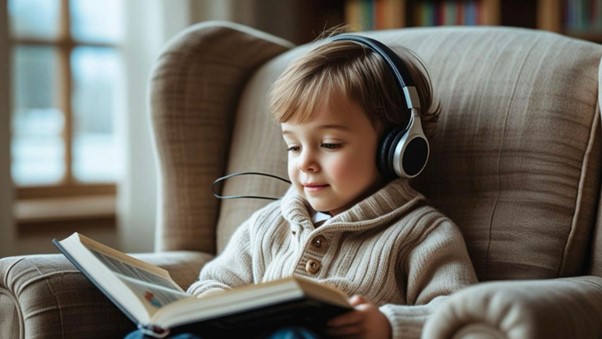
Audiobooks have been around for a long time, rising to prominence in the 1930s when the American Foundation for the Blind established their first recording studio. Since then, audiobooks have become more and more popular for people from all walks of life. Audiobooks are a fantastic way of accessing literature whilst on the go and open up an exciting world for those who may struggle to read or much prefer a distinctive auditory experience. With famous stars and influential people sitting down and recording themselves reading some of the greatest books ever published, more and more people are inclined to listen to an audiobook. As per The Guardian, the Publishers Association (PA) reported that ‘Digital revenue – encompassing audiobooks and ebooks – rose 17% between 2023 and 2024 in the consumer market, to £566m’. As a teacher, did it bother me that a child may not have read their reading book and written it down in their reading record? Not really. If they had listened to an audiobook before bed or in the car then they are still accessing literature, it is just reading in a different format. Reading is still reading is it not?
Educational eBooks
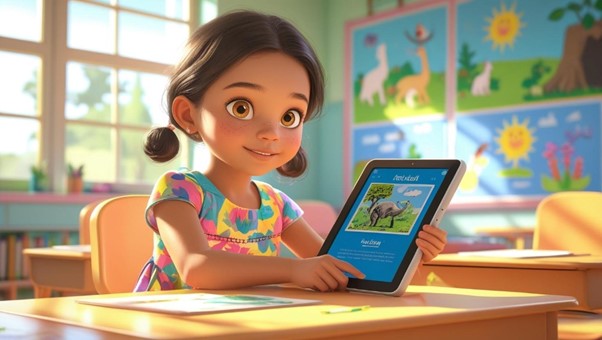
eBooks are an excellent way of instilling a passion for reading, particularly for those who may be daunted by printed texts or merely need something that satiates all senses. Not only do eBooks incorporate a variety of multimedia which are interactive, colourful and fun but they are a fantastic way to appeal to younger audiences. In addition to this, LINE states that ‘According to the British Educational Suppliers Association (BESA), digital resources accounted for approximately 41% of total spending on learning resources in 2020, compared to 32% in 2018’. Which also leans into the fact that COVID had a lot to answer to when all classroom lessons were taught online and teachers were using a variety of technological resources that were readily available.
eBooks address accessibility needs for those children who may be visually impaired, allowing children to adjust font size and to have access to read-aloud features. Read-aloud features also expose children to language that they may not have heard before. Children are given options to highlight unfamiliar words, promoting further computer-based skills where they can research what a particular word means. Not only does this help improve the child’s contextual understanding as well as extending their vocabulary but it also provides them with independent learning opportunities.
Impressive individuality
Life would be boring if schools were consistently churning out children who ‘fit the mould’. Children who learnt in a specific way and did not have any semblance of individuality. Let’s face it, it’s not real life. Let’s celebrate that each child has a unique learning style. Let’s celebrate that there are hundreds of round pegs that don’t want to fit a square hole. Technology has a fantastic way of supporting those learners who don’t find it easy to read books and who have particular learning needs. We need to push these amazing resources in a world which is so technologically advanced already. I have witnessed first-hand the advantages technology has for all learners, whether that is children who are exceeding expectations or who are severely dyslexic. This is why assistive technology for dyslexic students is so important.
In a world which is now so technologically reliant, we need projects and initiatives that help support children learn about technology and this is where Technology Books for Children can help. Technology Books for Children encourages children to read for pleasure by reading about technology in a fun and exciting way. They share resources that have been created by their own charity as well as promoting author visits which enables schools and children to learn more about technology and how it can help them inside and outside of the classroom. These resources can be a great way to use technology to help children learn.
So, when I see a young child’s face light up because they have learnt a new word in an eBook or they bound over to my desk each morning telling me about the audiobook they’ve listened to in the car, I can happily say that ‘Yes, that definitely beats the smell of a book’.
Natalie Dyer is a Guest Blogger at Technology Books for Children
She is an English specialist and primary school teacher of seven years. Natalie has a degree in Drama and creative writing and a passion to foster a love of learning amongst children both inside and outside of the classroom.
Support our work
- Consider making a donation today
- Share this article with others
- Follow on (Twitter, Instagram and LinkedIN)
References
Jordan, Justine (2025) The Guardian, UK audiobook revenue up by almost a third last year https://www.theguardian.com/books/2025/jun/18/uk-audiobook-revenue-up-ability-multitask-publishers-association
LINE (no date), The trend for ebooks in education
https://line.industries/updates/the-trend-for-ebooks-in-education
Brilliant article! We love having both physical books, magazines and a Yoto at home for audiobooks! There are so many different ways to enjoy words!
Excellent article.
Very well said and I agree that it shouldn’t matter what format a child uses. The most important thing is that a child gets the opportunity to fall in love with books.
Well written article making lots of valid points on a topic all of us should be aware of. I look forward to reading more from the author.